Showing posts with label kinesics. Show all posts
Thursday, September 3, 2015
"Anna Karenina" SUMMING UP
(31) "ANNA KARENINA": SUMMING UP
I started out posting my lecture notes on Anna Karenina with an introductory posting on this blog on Dec. 6, 2014. Now we're already pushing into the end of 2015. Counting this final posting, I have put up a total of 32 bits and pieces on the novel, plus, in the middle of this, I have written a long review article on the latest translation into English, by Marian Schwartz.
We could go on indefinitely discussing "AK," since a novel this long and this great presents opportunities for almost endless discussion. A few things we haven't got around to: the meaning of the Biblical epigraph--"Vengeance is mine; I will repay" (the critic Boris Eikhenbaum, in his Tolstoy in the Seventies, devotes a whole chapter to the epigraph); the art theme (revolving around the painter in Italy, Mikhailov); the way that the two Alexeis (Karenin and Vronsky) have a lot in common; Tolstoy's use of irony and sarcasm; the theme of death (especially prominent in the passages describing the slow death of Lyovin's brother, Nikolay); humor and comedy in the novel; the ending of the novel.
About the ending. You sometimes think that Tolstoy might have done better to end the book with Anna's suicide. The final part (Part Eight) of AK meanders along, moralizing, philosophizing, describing, perhaps, as much Tolstoy's own personal problems as those of his alter ego Lyovin. A passage in Ch. 8--the last sentence in that chapter--describes Lyovin's dilemma but is also exactly descriptive of Tolstoy's own personal dilemma: "He was miserably at odds with his very self, and he strained all his spiritual resources to escape from that condition." The whole book is about reasoning one's way through to an acceptance of non-reasoning, but the round and round of this process in Part Eight gets tedious. Tolstoy was stricken with bouts of depression throughout the writing of this novel, but that situation is reflected most obviously in the last part.
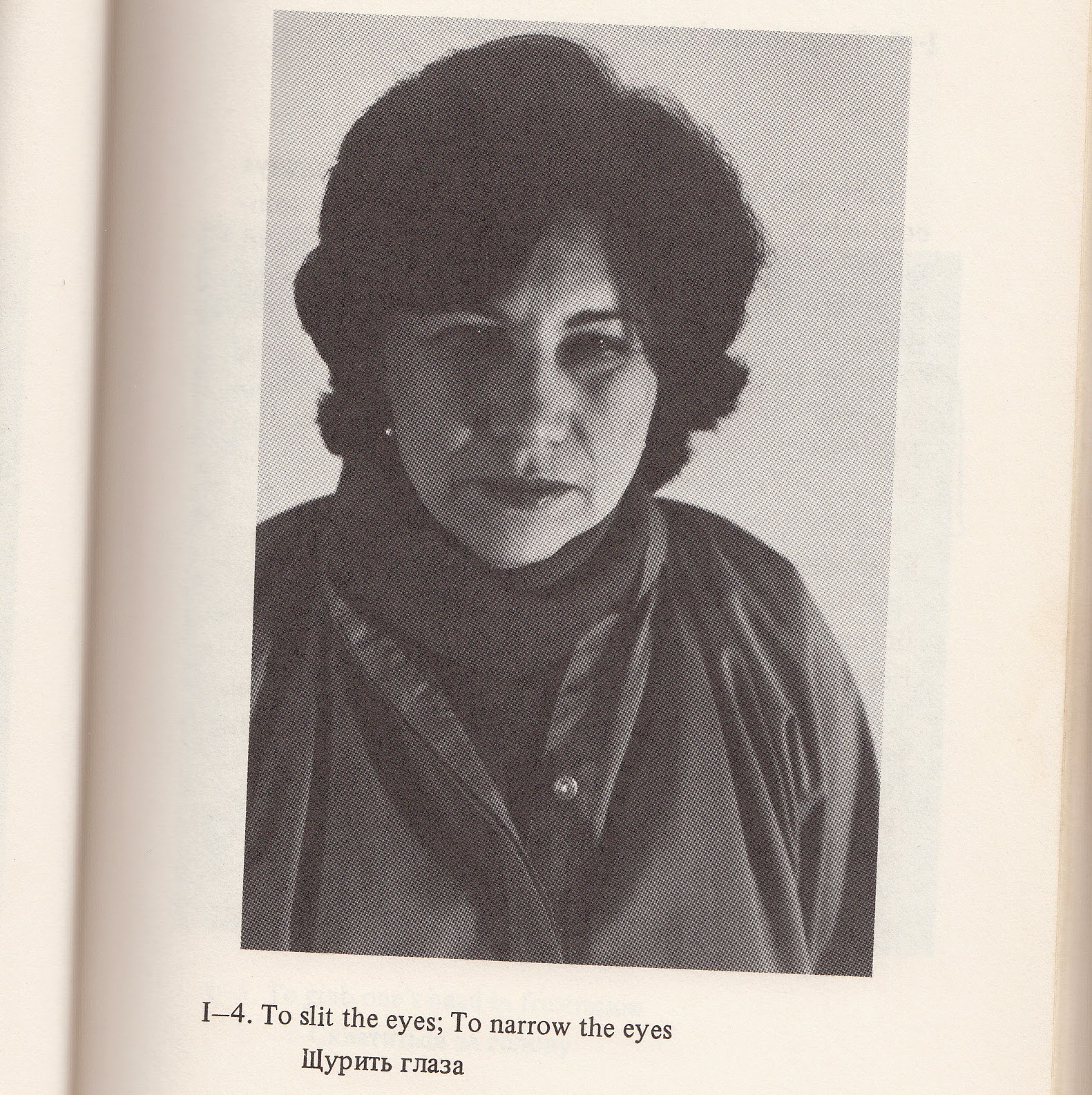
Other things worthy of discussion: great prose often develops out of great poetry, and "AK" would not be what it is if not for the influence on Tolstoy of the poetry of Tyutchev and Fet; the three Annas--why are there three--Anna herself, her maid Annushka, and her daughter Annie--and to what extent are the lesser Annas (the maid and daughter) spectral counter-images of the main character? What else? The homosexual officers who make a brief appearance in Part Two, Ch. 19 (what is their role in the novel?); gestures and kinesics and facial expressions (why does Anna habitually narrow her eyes?).
Back when I was teaching Anna Karenina to students at Miami University I used to conclude my lectures with the following:
Anna Karenina is probably the greatest novel ever written. It is certainly the best ever written on the subject of marriage and family life. It reverberated through all of Russian literature during the remainder of the nineteen century and then all through the twentieth and now into the twenty-first. It was Chekhov's favorite novel, Bunin's favorite novel, Nabokov's favorite novel (not counting his own--but even such a consummate egoist as Nabokov was knew deep in his soul that he would never write anything as great as "AK.").
Chekhov's stories are full of subtle pokes at the Great Master, airings out of Tolstoy's marriage-family theme in new ways. Emerging out of Tolstoy as well, Bunin presented a fresh treatment of the love-death theme. In Nabokov's novel Pnin, we have characters reading and discussing "AK," interpreting it. There are even grounds for asserting that Nabokov's treatment of kinesics and the language of gesture in Pnin has its origins in the extensive attention paid to kinesics and gesture in "AK."
The list can go on and on. We find touches of "AK" in Sologub's Petty Demon, in Solzhenitsyn's One Day, in Bulgakov's Master and Margarita. Etc. Etc. Few pieces of Russian prose written after "AK" escape unblemished. The book has influenced almost all Russian writers.
In a word, it's a great novel. I love it and never get tired of reading it. Over and over. Each time I read it a find marvelous new things. Great art is inexhaustible. But some of you sitting out there in my audience today don't like the book. Others have never got around to reading it. My spies at the video stores downtown have provided me the names and photographs (taken with a hidden camera) of those of you who went to these stores in search of a tape of "AK," a movie.
For shame. We'll be posting those photographs out in the hallways of Irvin Hall, Mother Miami, in a sort of "gallery of shame." This is right in the Russian-Soviet tradition of self-criticism and shaming as a means of promoting moral rectitude.
But what about those of you who made the effort, who read and studied this long novel, who mulled over its many themes and characters and STILL DON'T LIKE THE NOVEL? Well, at this point it's time for me to stop trying to promote the book and give up. People have all different tastes, and although it's difficult for me to acknowledge the intelligence of anyone who does not appreciate "AK," I must, at least grudgingly, say, Okay, maybe even some intelligent people don't like Tolstoy.
In conclusion, let me quote from a great writer, and a man who, like some of you readers, worked over "AK," studied its themes and characters, deeply cogitating on anything and everything concerning the novel, and, in the end, found the book sorely lacking in redeeming social qualities.
"Concerning Karenina, I assure you that for me that abomination does not even exist, and it only annoys me to think there are people who place any value on the novel."
Of course, anyone who knows much about the ups and downs and changing of minds over the long lifetime of Lev Tolstoy can easily guess who is responsible for that quotation. It comes from a letter Tolstoy wrote late in his life (cited in Eichenbaum, Tolstoy in the Seventies, p. 162).
Tuesday, January 27, 2015
"Anna Karenina" EMOTIONS, INTUITION, UNSPOKEN COMMUNICATION, BODY LANGUAGE
(16) Rationality and Irrationality
In Tolstoy's time there were no computers reading human faces, puzzling out the furrows in our brows or the lack thereof (see previous posting: "Big Brother Wants to Know"), but Tolstoy seemed already to be an expert on how looks and smiles sometimes communicate better than words (see previous posting: "The Eyes and Smiles").
Russian writers of the nineteenth century often have a way of reasoning their way toward non-reasoning. In other words, they use a great deal of logical thought to arrive at the conclusion that the great truths of the universe are not rational, but intuitive.
The two greatest anti-rational rationalists--or to look at it from the other direction--rational anti-rationalists--of nineteenth century Russian literature are Tolstoy and Dostoevsky. Certainly one of the best novels in this vein is "Anna Karenina." Note how often in this book that the characters are guided by emotions, rather than reason. A good deal of the communication between characters is wordless, and sometimes the most important decisions in people's lives come about through misinterpretation of bodily language, or through a reliance on anything but logic.
Late in the book, e.g., Anna's and Karenin's lives are influenced by Karenin's acceptance of a quack, the spiritual medium (Landau), and the hyper-rationalist Koznyshev lets emotions and mushrooms distract him from the rational speech of proposal that he is about to proclaim.
Reasoning does not seem to lead to solutions of life's problems, nor does philosophizing (which is a kind of deep abstract reasoning). Lyovin agonizes all through the novel, attempting to reason his way to truth, but he ends up deciding that the instinctive life of the non-reasoning peasant is the best truth of all:
"Isn't it distinctly to be seen in the development of each philosopher's theory that he knows what the chief significance of life is beforehand, just as positively as the peasant Fyodor and not a bit more clearly than he, and is simply trying but a dubious intellectual path to come back to what everyone knows?" (832). Of course, Lyovin is Tolstoy's alter ego, and both his struggles to understand life through reading the great philosophers and his ultimate conclusion that the illiterate peasant knows best after all are Tolstoy's own conclusions.
In "Anna Karenina" people do not act very reasonably, even when it may be in their best interests to do so. Toward the end of their life together Anna and Vronsky are involved in continuous destructive quarrels, which some outside evil force seems to promote, and which they carry on even when they are aware that they are destroying one another. Here Tolstoy seems to be suggesting that there are many things more important in motivating human behavior than logic and reason.
Lyovin's (Tolstoy's own) desire to abandon reason and find some "natural," non-thinking, intuitive truth (usually in communion with nature or the earth) is nothing new in Russian literature, or in world literature for that matter. In the twentieth century, e.g., Solzhenitsyn--much influenced by Tolstoy--perpetuated this ancient idea.
All of this, however, in wrapped up in a huge contradiction (the very contradiction of Lyovin in "AK"), since an intellectual, a thinker, arrives--through or by means of thought-- at the idea of negation of thought. It also, of course, can be a very dangerous thing, since denigration of reason and exaltation of human "natural" animality is just a step away from admiring beastliness and amorality, even chaos. The great twentieth-century short-story writer, Isaac Babel, got himself rather badly involved in this disturbing contradiction, when he wrote his Red Cavalry stories.
Here are several examples of how important a role unvoiced communication plays in "AK":
(1) Examples where one character misinterprets another's thoughts by "reading" body language
(a) When Anna tells Vronsky that she is pregnant with his child, while still married to Karenin, "a proud and stern expression came over his face.
"Yes, yes, that's better, a thousand times better! I know how painful it was," he said
"But she was not listening to his words, she was reading his thoughts from the expression on his face. She could not guess that the expression arose from the first idea that presented itself to Vronsky--that a duel was now inevitable. The idea of a duel had never crossed her mind, and so she put a different interpretation on this stern expression" (333).
(b) Lyovin watches Kitty in her conversation with Veslovsky. She is moved by his description of Anna's life, but Lyovin thinks she is in love with Veslovsky:
"He saw on his wife's face an expression of deep feeling as she gazed with fixed eyes on the handsome face of Vasenka" (598). This leads to an eruption of jealously and to Lyovin's decision to throw the young fop off his estate.
(2) Good examples of unspoken communication
(a) Before the beginning of their affair Anna and Vronsky are at a soiree, V. is pursuing A. and she is pleased despite herself. At one point she says, "That only shows you have no heart". . . . "But her eyes said that she knew he had a heart and that was why she was afraid of him" (148).
(b) Lyovin and Kitty in the scene already discussed (previous posting), when she is trying to spear a mushroom and talking about bears, but "her lips, her eyes and hands" are expressing all the significant things (405)
[Another good example of unspoken communication is to be found in Tolstoy's "The Death of Ivan Ilich," when the hero's brother-in-law comes for a visit, lays eyes for the first time on the sick man and says nothing. But his eyes are clearly saying, "You're a dead man."]
(3) Bad, rather unbelievable examples of unspoken communication
(a) Kitty and Varenka at the spa in Germany:
"The two girls used to meet several times a day, and every time they met Kitty's eyes said, 'Who are you? What are you? Are you really the exquisite creature I imagine you to be? But for goodness sake don't suppose,' her eyes added, 'that I would force my acquaintance on you; I simply admire you and like you.'
'I like you too, and you're very, very sweet. And I would like you better, still, if I had time,' answered the eyes of the unknown girl" (228).
The problem here is that eyes simply don't have such a big vocabulary!
(b) The scene of the writing with the chalk at the time of Lyovin's marriage proposal to Kitty (already discussed: see posting "Love and Mushrooms")
Subscribe to:
Posts (Atom)